
NIU’s health sciences program is designed with a clear purpose: To prepare students for the complex, evolving landscape of health care. Whether students are aiming for careers in allied health, pursuing professional school or already working in the field, our program offers both flexibility and depth.
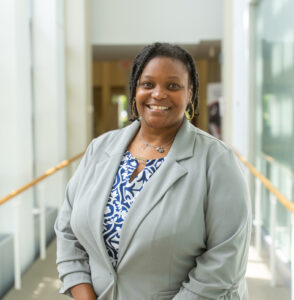 “We’ve built a program that prepares students for a variety of allied health and interprofessional fields,” said Shondra Clay, chair, School of Interdisciplinary Health Professions at NIU. “They graduate with a strong foundation in health care leadership, finance and management strategies, cultural competency and patient care. We also emphasize hands-on research experiences with faculty who are experts in STEM education, health disparities, health care management and interprofessional collaboration.”
NIU’s health sciences curriculum is also uniquely flexible. Students can choose online, hybrid or
in-person formats and select from a wide range of courses tailored to their goals — including prerequisites for professional schools and programs. It also supports degree-completion for working professionals with prior health care credentials.
Community partnerships, including those with the P-20 Center and regional healthcare organizations, further enhance real-world learning and professional networking opportunities.
Student outcomes reflect the program’s impact. Trinity Bui, a radiologic technologist and spring 2025 graduate, completed her degree while working full time. 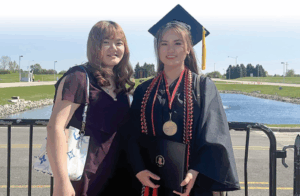
“The flexibility it offered was one of the biggest reasons I was able to succeed,” she said. “I often needed more time to process readings and assignments; I was able to move at a pace that worked for my life without feeling like I was falling behind.”
Bui said the experience helped her grow personally and professionally.
“This experience has shown me that even with all the obstacles, I can still achieve something meaningful,” Bui said. NIU students often cite affordability, location, strong faculty mentorship and engaging course options as key reasons they choose the program —and, as Bui’s story shows, why they succeed.
