
Rose Mace knew she needed to make a change.
After her primary care doctor suggested she improve her health and consult with a nutritionist, she tried adjusting her diet on her own. She exercised regularly and made swaps she thought were healthier. The results, however, were minimal.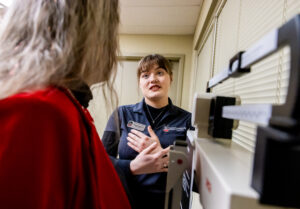
“I tried switching my diet but didn’t experience much weight loss on my own,” Rose said. “My goal for nutrition consultations was to identify any areas where I could make improvement.”
She found that guidance through Nutrition Coaching at NIU Recreation, a program that provides one-on- one nutrition support to NIU students and community members in DeKalb and surrounding areas.
Designed to meet clients where they are, the program offers in-person and virtual coaching along with hands-on cooking classes, grocery store tours, interactive workshops and speakers for classes and student organizations. All services are delivered by graduate students in the Master of Science in Nutrition and Dietetic Internship program (MS-DI) and are closely supervised by a Registered Dietitian Nutritionist (RDN).
“Through our MS-DI program, students gain meaningful supervised practice that helps them develop strong nutrition counseling skills,” said Nancy Prange, Director of Graduate Studies, NIU Nutrition and Dietetics. “Nutrition Coaching through NIU Recreation is one of my favorite opportunities because it allows students to build confidence, develop relationships with clients, and truly see the outcomes of their work. Watching them grow while making a real impact is incredibly rewarding.”
It’s a win-win for the NIU and local community.
“By offering low-cost services, we’re able to increase access to nutrition education support while helping train the next generation of nutrition professionals,” said Meg Burnham, Registered Dietitian Nutritionist who oversees the Nutrition Coaching program.
Rose was matched with Sam DiRienzo, a second-year graduate student in the Nutrition and Dietetic Internship program (MS-DI), and began meeting weekly. Their first session was face to face, while the rest were virtual.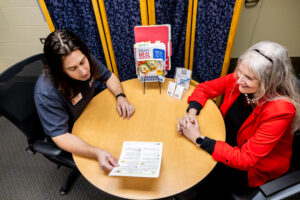
“One of my initial concerns was tailoring a program to my individual needs, such as with age group and food preferences,” Rose said. “However, Sam was knowledgeable and helpful throughout the program.”
For DiRienzo, the coaching relationship is about more than outlining what to eat. It is about building trust and listening carefully before offering solutions.
“There is only so much you can learn in a classroom setting,” DiRienzo said. “Actually sitting down with someone and helping them navigate their own habits is completely different.”
As a graduate student preparing to become a registered dietitian, he said the role has helped him apply textbook knowledge in real conversations.
“It allowed me to practice motivational interviewing, empathy and problem solving in real time with real clients,” DiRienzo said. “You can know all of the recommendations and guidelines but helping someone apply them to their own life is different.”
That individualized approach led to measurable progress for Rose.
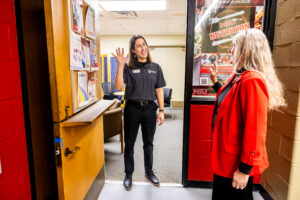 “Sam quickly identified some issues which prevented weight loss and provided suggestions for adding into my routine and with making better food choices,” she said. “I made gradual weight loss without ever feeling hungry by simply following Sam’s recommendations.”
At her next physical, her doctor noticed the difference.
“On my last physical, my doctor said that I achieved success in improving my overall health, shown in lower blood pressure and bad cholesterol by making certain nutrition changes,” Rose said.
DiRienzo said those outcomes often begin with small, manageable adjustments that fit into a person’s lifestyle.
“I hope my clients gain confidence in themselves and a sense of clarity,” he said. “Nutrition can feel confusing with so much information online. I want them to leave feeling empowered to make decisions that fit their lifestyle.”
The program also serves as hands on training for graduate students like DiRienzo, who gain experience communicating evidence-based information in ways that feel supportive rather than overwhelming.
“It has reinforced why I chose to pursue a career as a registered dietitian,” he said. “This profession is about more than nutrients and numbers. It’s about people.”
Rose said that support made all the difference and encourages others to take advantage of the resource.
“I want to emphasize that it’s not too late to start a fitness plan at any age,” she said. “I encourage students to utilize the NIU services to build their bodies and minds for balancing life’s stress.”
For students and community members who feel unsure about where to begin, Nutrition Coaching at NIU Recreation offers structured guidance, accountability and a personalized plan designed to support long term health.
March is National Nutrition Month. Take the next step to a healthier lifestyle.
