
Shicheng Chen, professor of Medical Laboratory Sciences at NIU, received a $40,000 Illinois Innovation Network (IIN) Sustaining Illinois Seed grant to support research examining the relationship between mosquitoes and environmental microorganisms.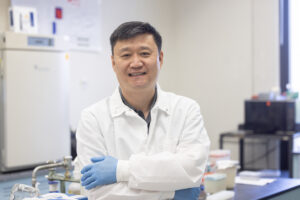
The IIN, a consortium of universities, research institutions and innovation hubs across Illinois, provides seed funding for collaborative research projects that address the state’s economic, health, social and environmental challenges. The grants are designed to help researchers develop pilot projects that can secure larger external funding opportunities.
Since launching the project in summer 2025, Chen and his research team – that includes three undergraduate students and one graduate student – have collected mosquitoes from sites across Illinois to investigate how environmental bacteria interact with mosquito populations and influence public health outcomes.
“My research explores how bacteria living in water, soil and insect habitats evolve and interact with their environment, including mosquitoes and humans,” Chen said. “By studying their genomes and microbial communities, we can better understand how some of these organisms survive, spread and sometimes cause disease and even spread antimicrobial resistant (AMR) genes.”
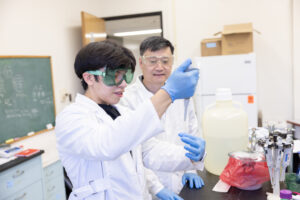 The team collected adult mosquitoes from six locations across the state: DeKalb, Sycamore, Kane County, Lee County, Rockford and Carbondale. Traps were deployed in urban, rural and agricultural environments, and researchers recorded environmental data, including GPS coordinates, temperature and humidity, at each collection site. They utilized the next generation sequencing technology to investigate mosquito microbiome and AMR genes.
According to Chen, the project’s findings could have significant implications for public health.
“My research focuses on understanding how mosquitoes interact with environmental microorganisms,” he said. “This work has two main impacts: improving our understanding of how some environmental bacteria transition into opportunistic human pathogens and identifying microbial and genetic factors that may influence disease transmission and AMR in the community and clinical settings.”
Chen said the research will help scientists better understand how environmental microbes move between ecosystems and living hosts, potentially contributing to disease emergence.
“Many AMR bacteria may originate in the environment, not just in hospitals,” Chen said. “This research supports the early detection of potential AMR pathogens, enhances our understanding of antimicrobial resistance, and contributes to efforts aimed at reducing the risk of future outbreaks.”
