
For one September day in Paw Paw, Illinois, a fruit that rarely makes its way to grocery store shelves became the center of a community celebration.
The third Annual Pawpaw Festival, held Sept. 26 at Veteran’s Memorial Park, brought together pawpaw enthusiasts, growers, families and food lovers to taste the distinctive fruit and learn more about its history and potential. Hosted by the Paw Paw Lions Club and the Pizzo Group, the festival also offered an opportunity for Northern Illinois University to connect with the community through food, education and student engagement.
Melani Duffrin, professor and FoodMASTER Initiative principal investigator at NIU, represented the university at the festival, greeting visitors alongside Matt Deitch, director of Northern Illinois Center for Community Sustainability (NICCS), who serves on the PawPaw Foundation board.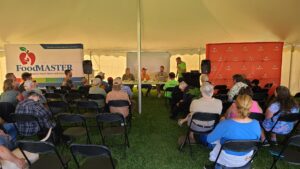
“The pawpaw festival brings people together to taste the fruit, meet growers and learn what makes it special,” Duffrin said. “It also shows how a university can support its community, sharing research and education that help local growers and food businesses develop new opportunities for the region.”
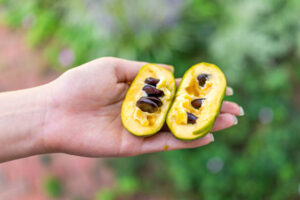
Pawpaws grow wild across much of the eastern United States, from the Gulf Coast to the Great Lakes. In Northern Illinois, they can be found in creek bottoms and shaded woods, where the native fruit develops its distinctive soft, creamy texture. Its flavor has been compared to banana, mango and vanilla custard, with large brown seeds tucked inside.
The fruit’s delicate nature is part of what makes the pawpaw both special and difficult to find in stores. Pawpaws bruise easily and have a short shelf life. For many people, the best way to experience a ripe pawpaw is close to where it was grown.
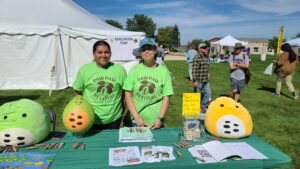 Health Sciences students Desirae Mastalka-Hollister and Aaayah Oaxaca helped set up the Pawpaw Foundation Education Tent and volunteered throughout the day.
“I most enjoyed getting to try pawpaws for the first time,” Mastalka-Hollister said. “It was nice to also see the different arts and crafts locals made to show their love – not only for the town – but the fruit as well.”
Duffrin said experiential learning opportunities like this allow students to make community connections.
“Students had the opportunity to interact with families and food enthusiasts while sharing educational resources about a fruit that is both part of Illinois’ natural landscape and a potential opportunity for local growers and food businesses,” Duffrin said.
The pawpaw may be an uncommon sight in a grocery store, but in Paw Paw, it offered a reason for people to gather, learn and share a taste of what grows close to home.
Learn more about pawpaws and why they’re special.
